Resources /
Blogs
Introducing Ambee MCP: The Next Chapter in Climate-Aware Intelligence
September 16, 2026
Nandini Shivraj
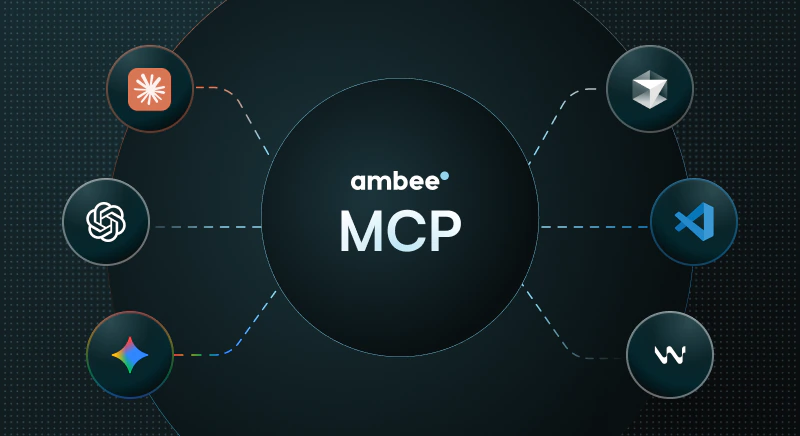
Every AI assistant is eventually asked a question it cannot answer from what it already knows: Is it safe to run outside this evening, will pollen spike before the weekend, should an outdoor shift start later tomorrow? These are not reasoning problems but rather data problems. A model needs a current reading and a forecast, and it needs them from a source built for the purpose, not a guess extrapolated from training data.
Until now, getting that data into an assistant meant writing custom integration code for every product that might want to ask the question. A health app, a smart building system, and an internal Slack bot would each need their own plumbing to the same API. MCP removes that repetition. An assistant is pointed at one server, it discovers what that server can do on its own, and it calls the right tool when a question calls for it.
The Ambee MCP server exposes air quality, pollen, and weather data as a set of tools that any MCP client can call directly, using the account credentials teams already have.
The REST API remains fully available, and both draw from the same account and quota, so nothing already built on Ambee needs to change.
An MCP client opens a session with the Ambee server and asks what tools are available. When a user's question calls for environmental data, the assistant selects the right tool, sends the request with the account's API key, and the Ambee server resolves the location, retrieves the reading from the relevant dataset, and returns structured data for the assistant to interpret and explain in its own words.
Locations can be passed as coordinates or as a free-text place, a city, an address, or a postal code. Resolution happens on the server, so the assistant does not need a separate step to look up coordinates before it can ask the real question.
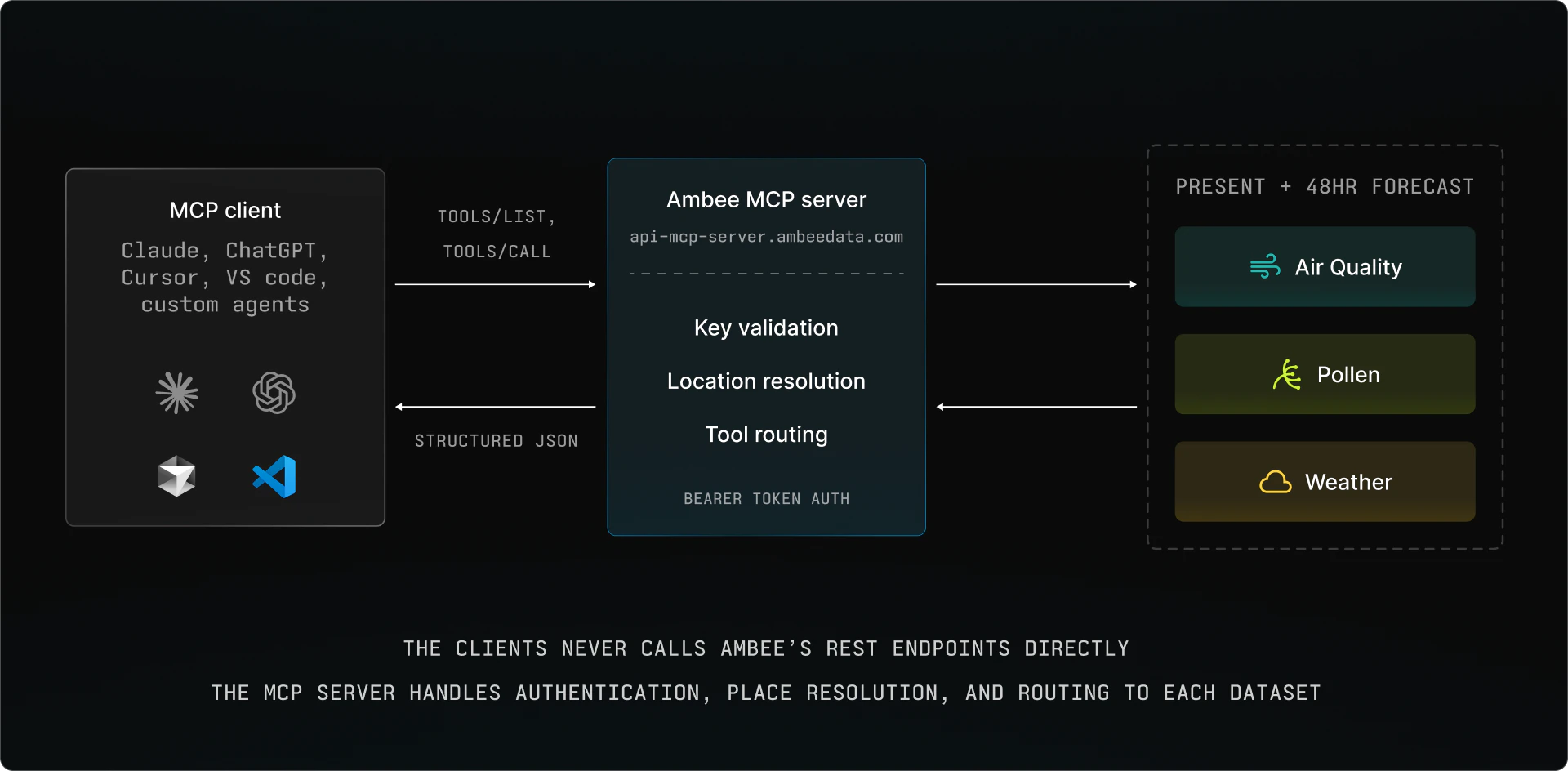
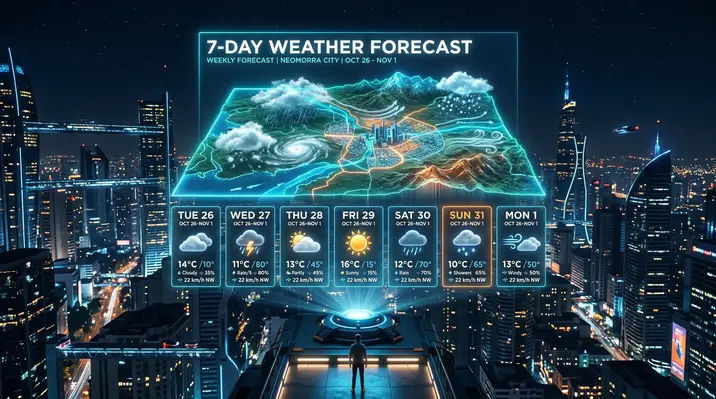
Each dataset ships with a present-conditions tool and a 48-hour hourly forecast tool, six tools in total.
Also listed on awesome-mcp-servers Ambee's MCP server is included in the community-maintained awesome-mcp-servers directory on GitHub, under Environment and Nature, one of the most widely referenced lists developers use to discover MCP servers.
"An API call answers the question you knew to ask. MCP lets the assistant figure out which question to ask in the first place," said Chandrashekar D, Director of Engineering at Ambee. "Once a model knows a pollen tool and a weather tool exist, it starts combining them in ways we did not have to program. That is the shift. We are not adding intelligence to the data. We are giving existing intelligence a way to reach it."
The interesting part of MCP is not any single tool call. It is what happens when an assistant is free to combine several of them without a developer having anticipated the exact combination in advance.
A pharmacy chain's internal assistant could be asked, in plain language, whether to increase antihistamine stock across its Texas stores this week, and it could reason across pollen forecasts for every store location without anyone having built a dashboard for that specific question. A logistics coordinator could ask whether a delivery route through the Midwest is likely to run into weather delays over the next two days, and the assistant could check the forecast tool at each stop along the route in a single conversation. A property manager could ask an assistant to draft tomorrow's building notice, and it could check air quality and weather together and write the guidance itself, because the outdoor common areas should be flagged before the model even gets to that decision. A wearable device's assistant could tell a user training outdoors not just what the air quality number is, but what it means for their specific run at their specific time.
None of these are dashboards someone had to build. They are questions someone had to think of, asked once, in ordinary language, to an assistant that already knew where to look. That is the difference between an API and a tool an AI system can reach for on its own.
Any product that already reasons in natural language can use this to ground its answers in real environmental conditions rather than a general impression of what is typical for a place and season. Early use cases include:
This works in ChatGPT in a few minutes:
Air quality, pollen, and weather are available now. Wildfire, historical air quality, and elevation are not yet exposed as MCP tools, and expanding this list is an active priority. If a use case depends on one of these, tell us what you are building, and we will factor it into what ships next.
Full setup instructions, authentication details, and example prompts are available in the MCP documentation. An Ambee API key is required to make tool calls, and the same key used for REST access works here.
00:00
/
00:00