


blog
Industry /
Insurance and risk
The intelligence layer for climate-exposed insurance portfolios
Ambee gives insurers a continuous view of climate risk across locations, assets, and perils.


Trusted Across Industries







Ambee gives insurers a continuous view of climate risk across locations, assets, and perils.
Climate risk is not predictable enough for traditional underwriting models. Areas previously considered low risk are facing wildfires, shifting flood patterns, and severe weather events.
The result of this is that portfolios are still priced on long-term averages, leaving claims unresolved.
Swiss Re Institute, 2024
Capgemini, 2022
Capgemini, 2022
Across underwriting, claims, cat modeling, and portfolio management.
Bring hyperlocal hazard exposure into underwriting. Move past zip-code approximations to risk scoring at the asset level, across wildfire proximity, flood history, seismic zones, and severe weather patterns.

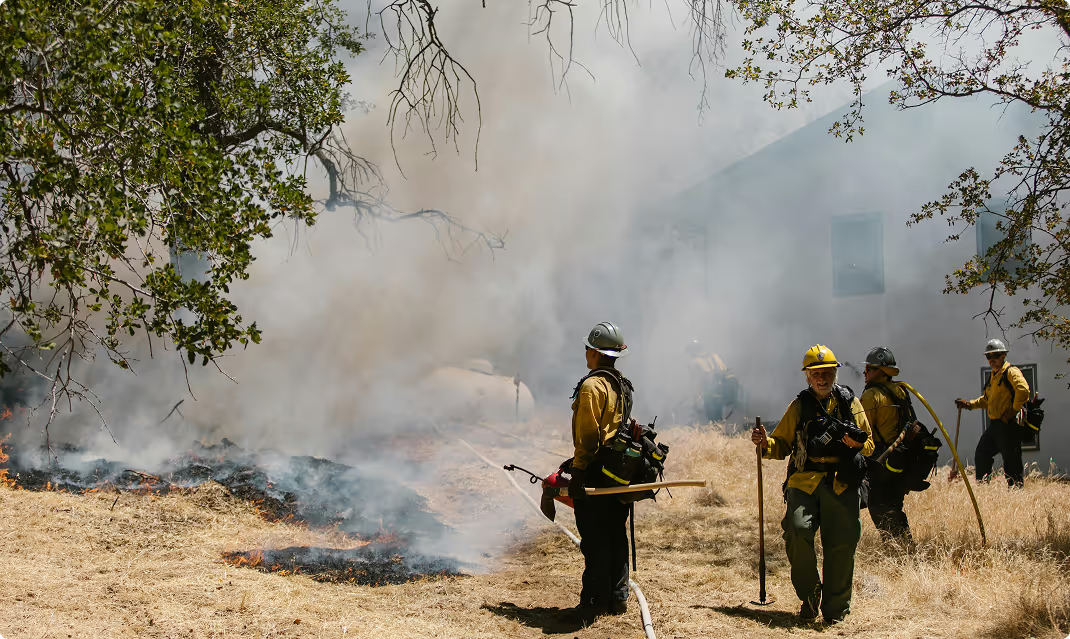
Verify what actually happened at the exact time and location of a reported loss. Real-time and historical event data give claims teams a clear, auditable record without back-and-forth.

Strengthen cat models with event-level inputs such as fire intensity, ground motion, storm severity, and flood depth. Peril-specific signals help improve how frequency and severity are projected.
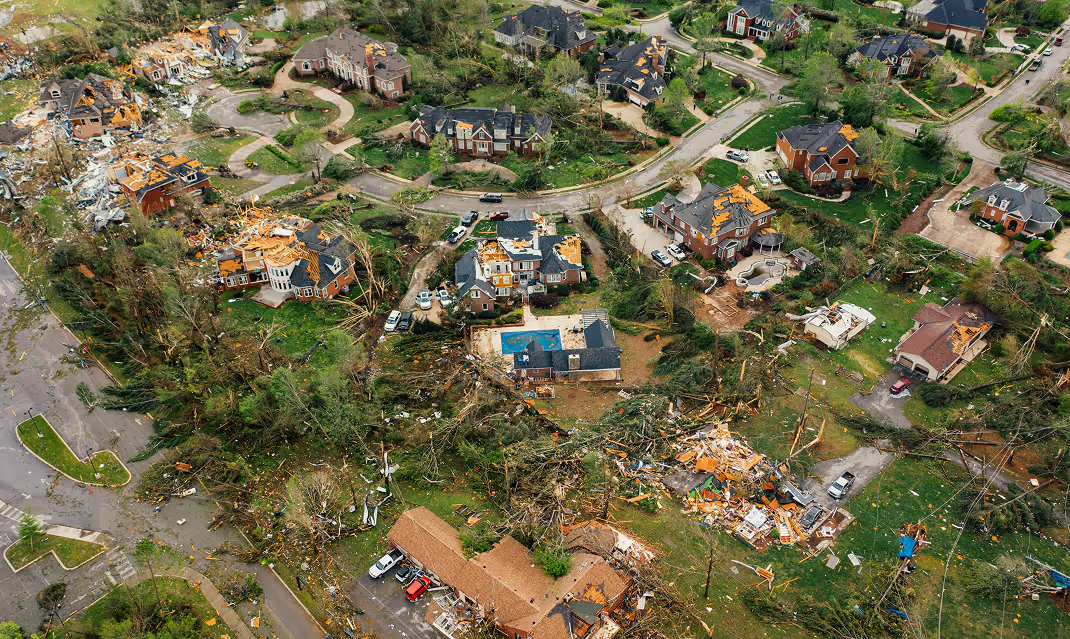
See how risk is distributed across your book by geography, peril, and time horizon. Identify concentrations early and adjust before losses start to accumulate.

Set environmental thresholds and let the system respond. When a wildfire crosses a boundary or a flood reaches a defined level, alerts and triggers fire in near real time, without manual monitoring.

Different geographies carry very different exposure profiles, even when they appear similar on the surface. Historical disaster patterns and location-specific risk signals help insurers design coverage that fits the realities on the ground, especially in high-risk or underserved regions.

A large financial services institution managed a lending portfolio spread across regions. Three gaps held it back:
No standardized climate risk scoring across regions
Limited ability to forecast long-term exposure over 10 to 30+ years
Rising pressure from ESG frameworks and regulators
With Ambee's climate data, the institution scored every asset against flood, heat, and water-stress exposure. Those scores ran across a range of warming scenarios, showing how each risk evolves over the decades ahead. Portfolio-level views brought it together, so teams could test any scenario across the full book.
For the first time, the institution could see which assets were most exposed, plan around them, and invest with confidence.
Research, case studies, and strategies for climate-aware underwriting, claims, and risk modeling.
.webp)