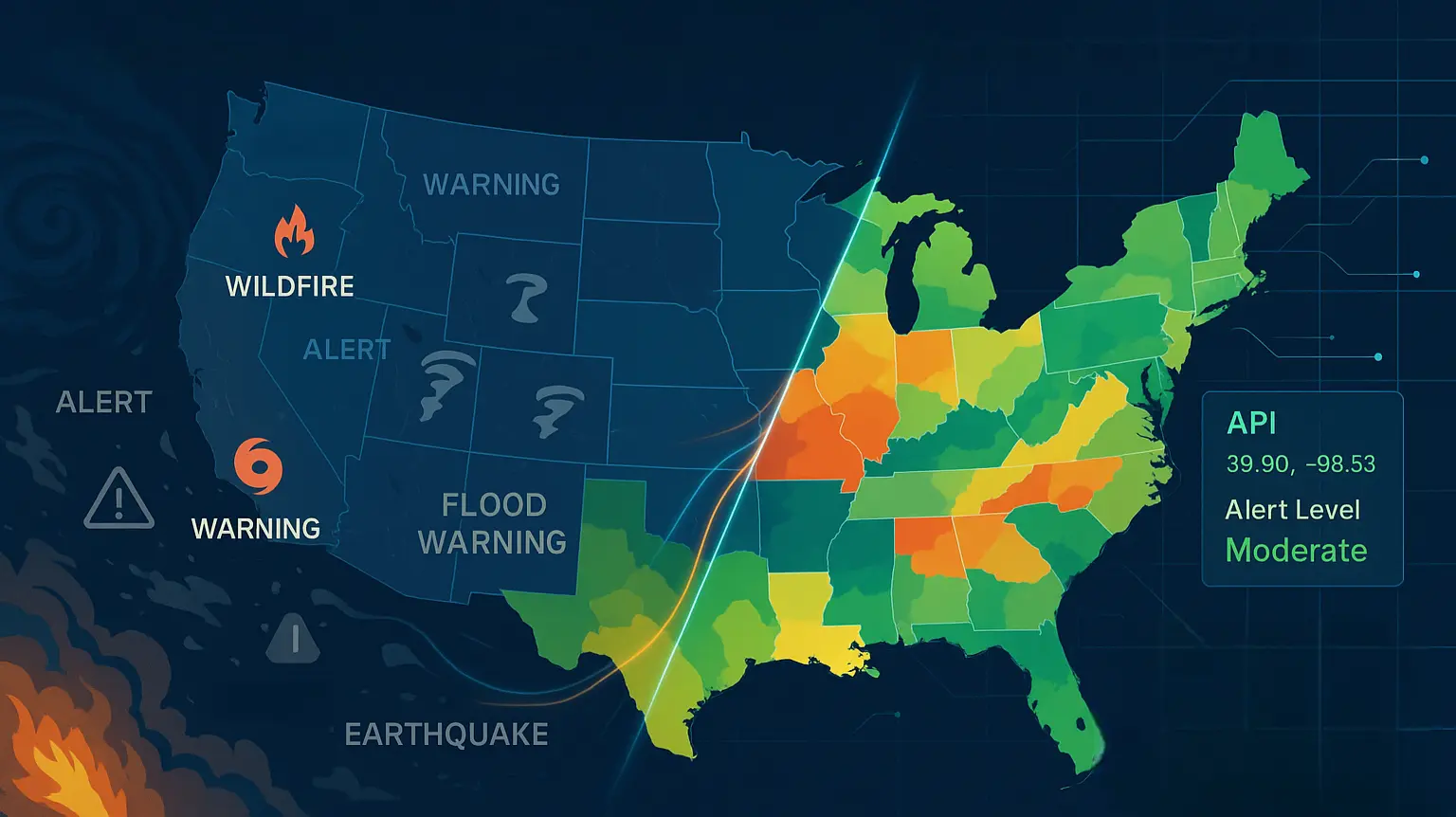












Environmental conditions shape what consumers search for, buy, and respond to every day. Ambee turns them into a targeting layer for your campaigns.


Marketing teams plan campaigns months in advance, but demand shifts day to day with changing environmental conditions. Allergens, air quality, and weather directly influence symptom onset and search behavior.
When AQI spikes, a respiratory health brand sees its highest-intent audience concentrate in specific geographies at that moment. The same signal makes an outdoor retailer campaign irrelevant and opens a conversion window for a delivery app.
Consumers are more likely to purchase when experiences feel personalized.
Rainy-weather ad targeting drove 40% higher CTR than identical ads in good weather, in a peer-reviewed field experiment.
sales uplift for allergy brands
higher VTR on YouTube campaigns
CTR improvement in programmatic campaigns across multiple EU markets
increase in impressions when campaigns were activated during high pollen exposure
ROI uplift in online video campaigns
increase in audience reach

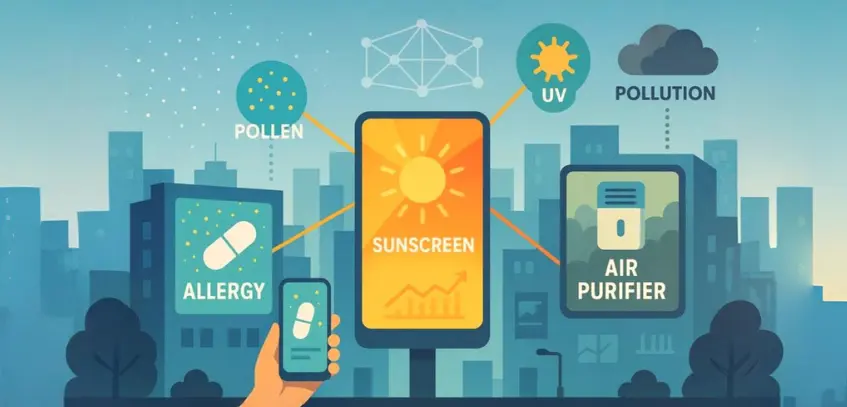
From trigger to creative to response, every campaign decision can move with the environment.
When pollen counts or AQI levels cross defined thresholds in a target geography, campaigns activate automatically in real time and pause when conditions improve.

Reach audiences based on real-time conditions like pollen severity, AQI levels, wildfire proximity, or weather patterns, precisely when intent is highest.

Dynamically adapt creatives to local environmental conditions, from allergy spikes and smoke exposure to severe weather and illness trends. Messaging stays relevant across regions.

Use short and mid-term forecasts to align budgets, creative launches, and channel activation with upcoming environmental and consumer demand peaks.

Activate campaigns in regions impacted by wildfires, extreme weather, or pollution spikes, ensuring critical products and messaging reach those who need them most.

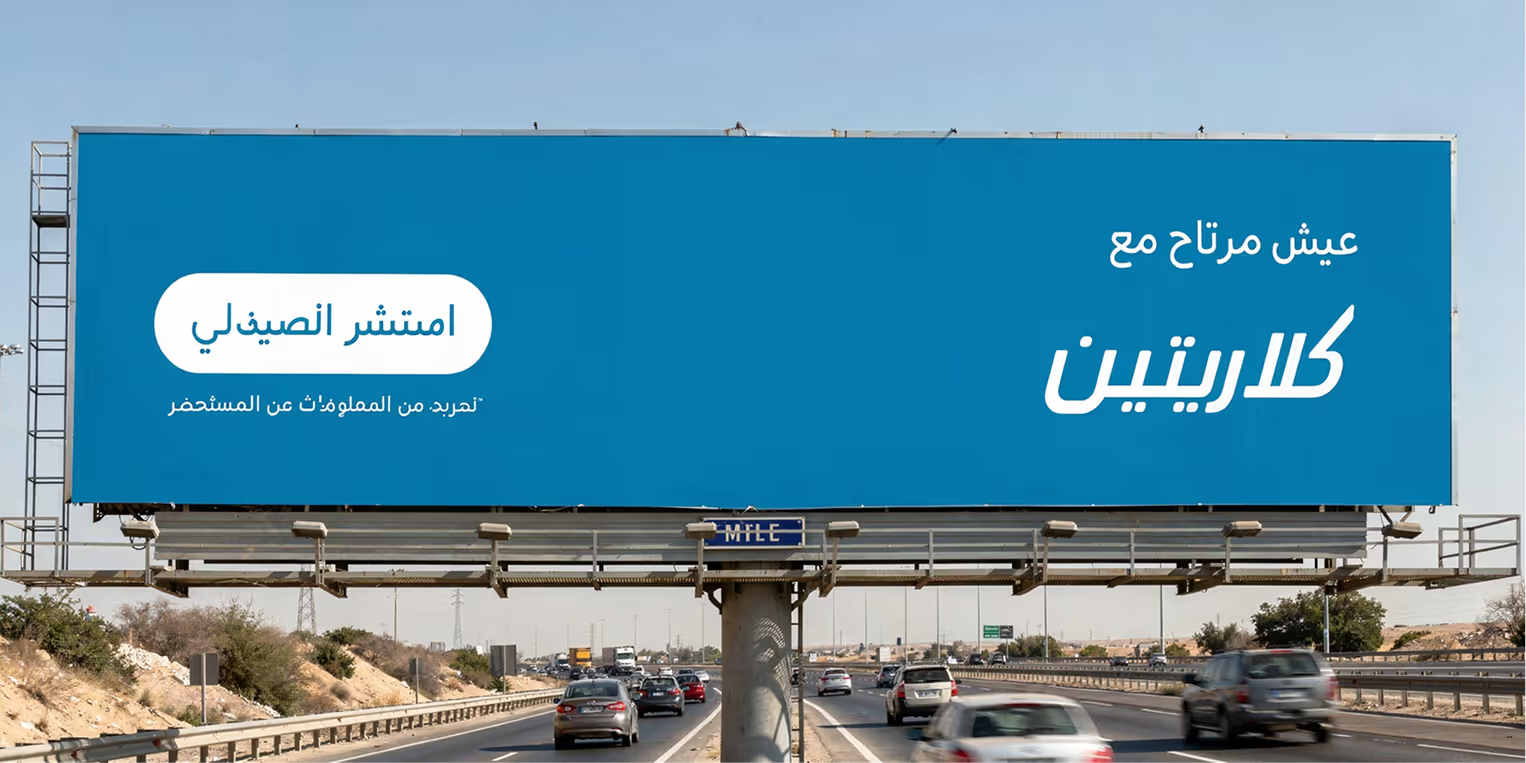
A campaign that reached allergy sufferers the moment symptoms surfaced, built with Bayer and powered by Ambee.
In Cairo, where pollution ran up to 12 times WHO limits, Bayer used Ambee's hyperlocal air quality data to fire ads only where pollution was moderate to very high, with creatives matched to local conditions. The campaign ran across Cairo, Alexandria, and Giza over two months


sales uplift
higher click-through rate
increase in ad viewability
growth in search interest