Resources /
Blogs
AccuWeather Alternative: Better Weather Data in 2026
August 28, 2026
DVS Roopesh
AccuWeather still works for basic forecasts, but growing complaints about intrusive ads, the removal of its free API tier, and past privacy concerns have pushed many users and developers to look for an AccuWeather alternative. The best alternatives in 2026 go beyond temperature and precipitation. They combine weather with environmental signals like air quality, pollen, and wildfire data through a single integration. Below, we compare the top options for consumers and developers alike.
AccuWeather has been a household name in weather for decades. But several issues have driven a steady migration away from the platform, and the reasons differ depending on who you are.
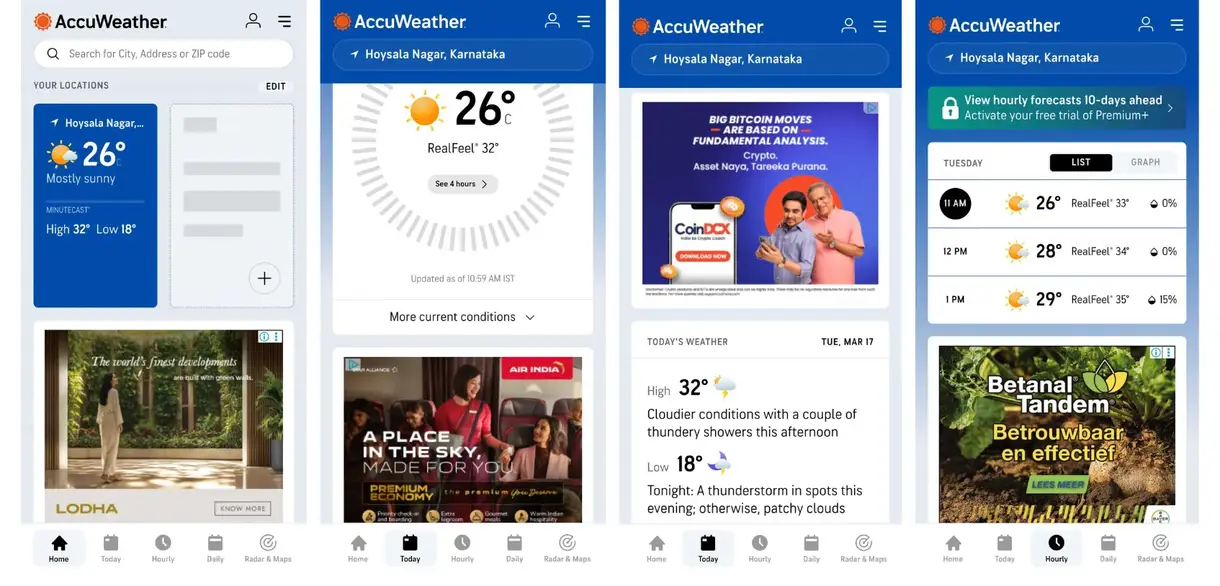
For everyday users, the ad experience has become the main frustration. The app's August 2025 redesign pushed advertising further into the core experience. Full-screen ads now load before the forecast does. Video ads autoplay when you open the hourly view. Even the premium subscription at $4.99 per month does not fully solve the problem, because many users report that the redesigned interface is harder to navigate, regardless of ad presence.
For developers, the bigger issue is the loss of the free API tier. AccuWeather discontinued free API access, which means anyone prototyping a weather widget, a side project, or a new product feature now faces paid plans from day one. Enterprise pricing is not transparent, and the documentation has not kept pace with competitors.
Then there is the privacy question. In August 2017, security researcher Will Strafach discovered that AccuWeather's iOS app was sending precise location data to a third-party advertising company called RevealMobile, even when users had explicitly disabled location services. The Electronic Privacy Information Center (EPIC) filed a consumer protection lawsuit against AccuWeather in 2018 under the DC Consumer Protection Procedures Act. Following that lawsuit, AccuWeather changed its practices and now allows users to decline non-functional data collection. But for many users, the damage to trust was already done.
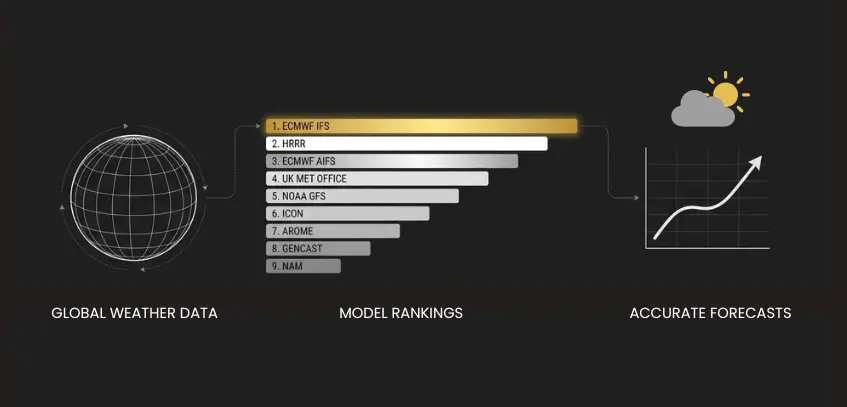
This is the first question people ask when considering a switch. The honest answer: no single weather provider is the most accurate everywhere, all the time.
A study commissioned through the University of Reading's Department of Meteorology tested five major weather apps over two weeks in England and Wales. AccuWeather ranked first for "nowcasts" (conditions within the next hour) but dropped to fourth for short-term forecasts about seven hours out. The Weather Channel took the top spot for overall daily accuracy.
ForecastWatch, the industry's leading independent accuracy evaluator, has been comparing billions of forecasts against observed conditions since 2004. Their data consistently shows that accuracy varies by region, forecast window, and specific weather parameter. The Weather Channel tends to perform well for daily US forecasts. AccuWeather holds its own for minute-by-minute precipitation. Apple Weather has improved significantly since acquiring Dark Sky's technology.
The takeaway is simple. The best alternative to AccuWeather is not just a different app. It is a provider that gives you the data depth and transparency to make your own informed decisions.
Before jumping to a list of alternatives, it helps to understand what separates a genuinely useful platform from one that just repeats the same problems under a different logo.
Most weather services give you a city-level forecast. That is fine if your entire city experiences the same weather at the same time, which it does not. What you want is data at your specific location, not a generalized average for a metro area. This matters for construction scheduling, agriculture, outdoor events, and even daily commute decisions.
Here is a gap that most weather apps do not address. Weather does not exist in isolation. Air quality determines whether you should exercise outdoors. Pollen levels decide whether today's run will be enjoyable or miserable. Wildfire smoke can make temperature readings irrelevant if the air is hazardous. Platforms that combine weather with these environmental signals in one place save you from juggling three different apps or stitching together multiple APIs.
If you are building anything involving trend analysis, risk modeling, or demand forecasting, you need historical weather data, not just today's forecast. AccuWeather locked historical data behind expensive enterprise plans. Many consumer apps do not offer it at all.
For developers, the quality of API documentation matters as much as the data. Can you get started in under 30 minutes? Are endpoints logically organized? Are response formats consistent? These are not glamorous features, but they are the difference between a smooth integration and a frustrating debugging cycle.
Here is how the top weather platforms stack up across the features that actually matter.
Most weather platforms give you temperature, precipitation, and wind. Ambee delivers weather as part of a broader environmental data layer that includes real-time air quality indexes, pollen counts broken down by species, wildfire risk tracking, and natural disaster monitoring.
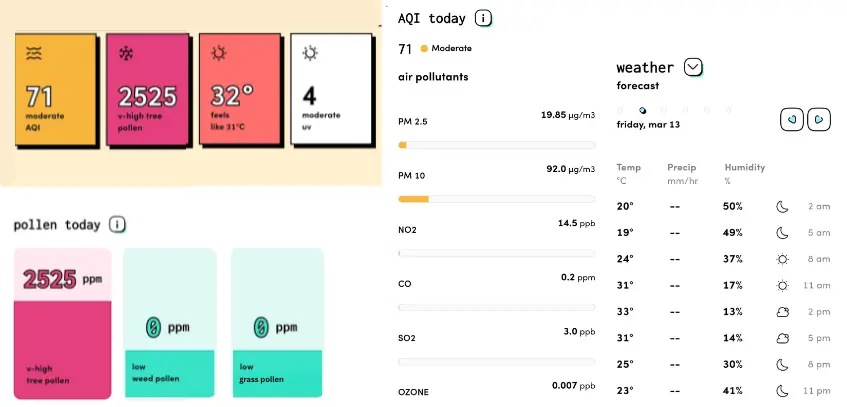
For developers, the value is straightforward. Instead of integrating three or four separate APIs for weather, AQI, pollen, and fire data, Ambee provides all of it through a unified API with consistent formatting and clear api documentation. The API supports real-time data, forecasts, and historical records, covering the three data modes most applications need.
For everyday users, the Ambee Android app surfaces the same data in a consumer-friendly format. You get your weather forecast alongside air quality readings, pollen counts, and environmental alerts in one place.
Where Ambee stands out most is in use cases where weather alone is not enough. Pharma companies tracking respiratory conditions. Insurance firms modeling climate risk. Supply chain teams planning around environmental disruptions. Retail businesses using ClimaChain to correlate demand patterns with weather and air quality. If your needs go beyond checking tomorrow's high and low, this is the platform built for that.
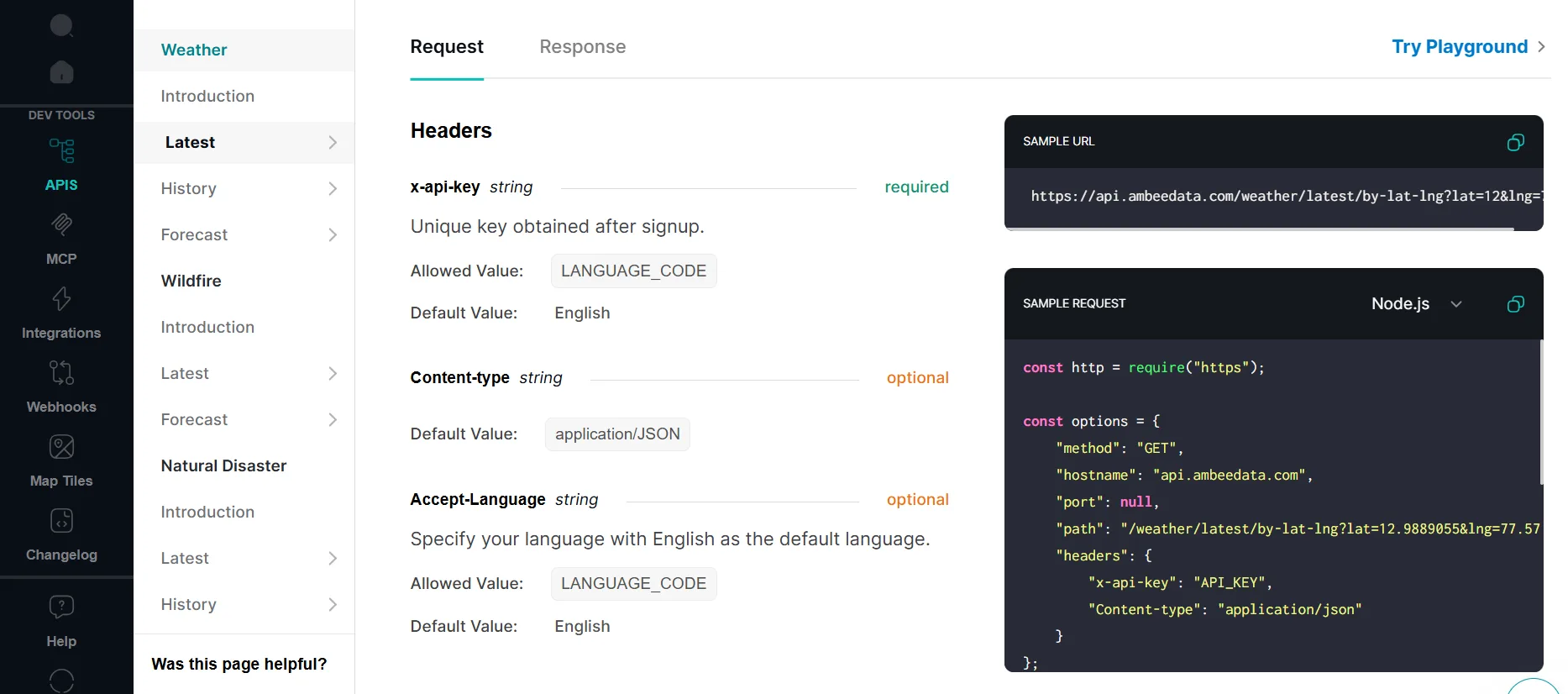
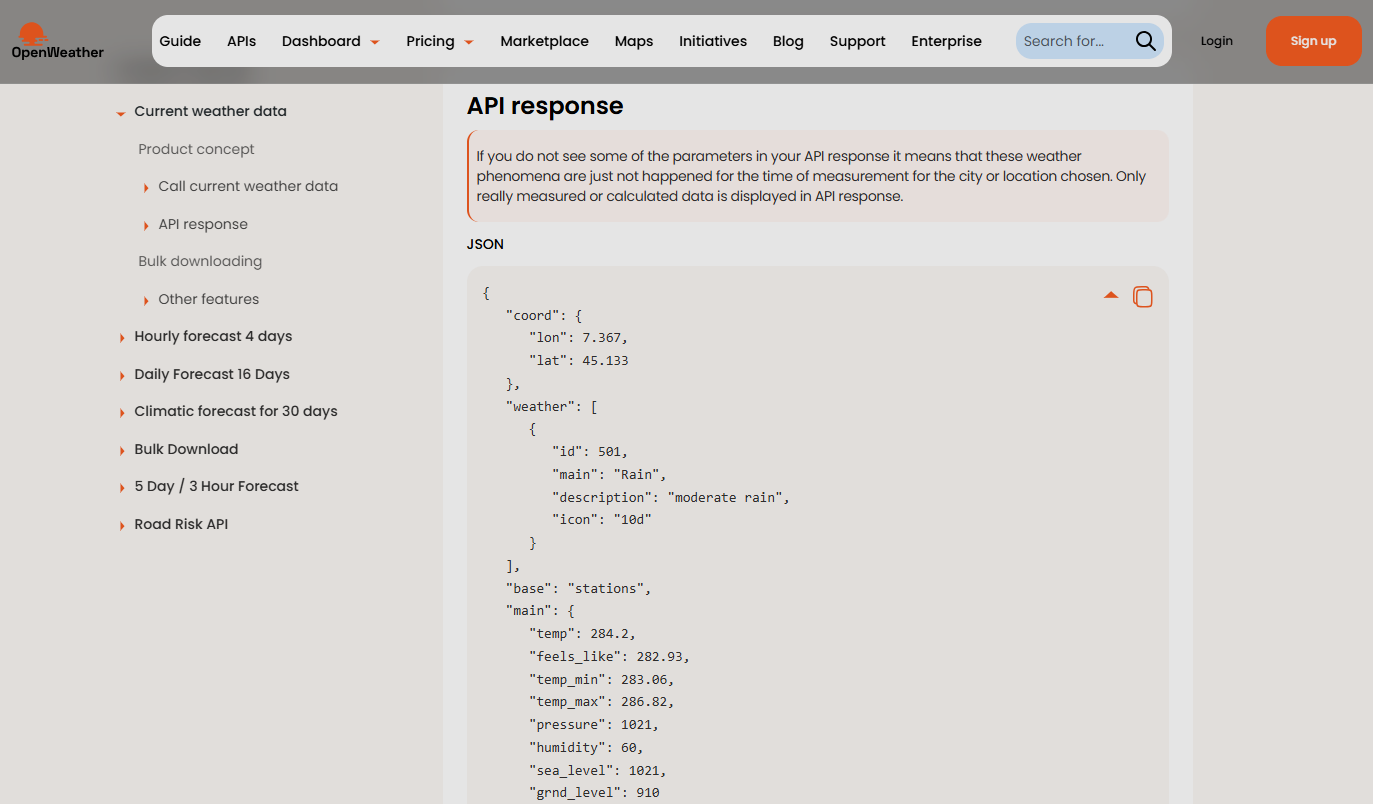
OpenWeatherMap remains the default for developers who need a generous free tier and a well-established API. The free plan provides 1,000 calls per day, which works for development and small-scale production. Coverage is global, the community is large, and the API has been stable for years. The trade-off: documentation can feel disorganized compared to newer providers, and the platform is weather-only. If you need air quality or pollen data alongside weather, that means additional integrations.
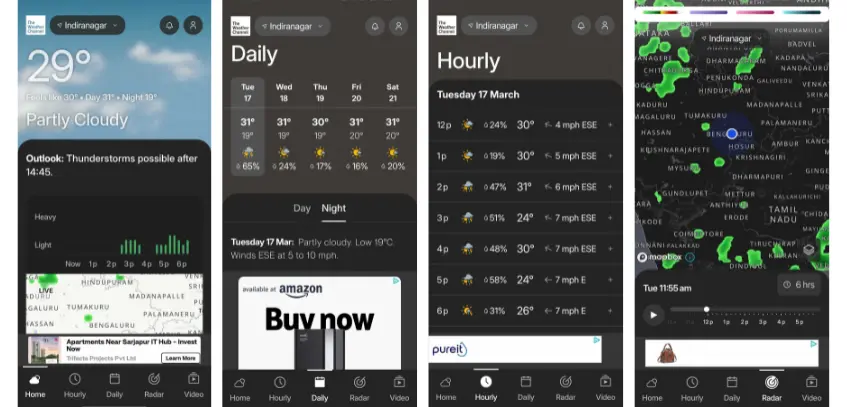
For the most polished mobile weather experience, The Weather Channel is hard to beat. It consistently ranks as the most accurate daily forecaster according to ForecastWatch's multi-year analysis. The interface is clean, storm tracking is excellent, and severe weather alerts during major events are genuinely useful. At $4.99 per month for premium, it is not cheap for what amounts to an ad-free version of the free app. And there is no real API offering for developers, which limits its utility to consumer use only.
Apple Weather is the simplest option for iPhone users since the Dark Sky acquisition. Hyperlocal precipitation forecasts are a standout feature, though developer access to raw data is limited. Tomorrow.io (formerly ClimaCell) uses proprietary sensing technology and offers enterprise-grade operational tools, but paid plans start at $99 per month. Windy is excellent for wind and aviation-specific forecasts. The NWS API is completely free and unlimited for US-based projects, though it only covers the United States and the documentation assumes meteorological knowledge.
The right choice depends on how you plan to use weather data.
If you are a developer building a weather feature, start by defining what data modes you need. Real-time only? Real-time plus forecasts? All three plus environmental data like air quality and pollen? If your scope extends beyond basic weather, Ambee covers the full spectrum through a single integration. If you strictly need weather and want to minimize cost, OpenWeatherMap's free tier is reliable.
If you are a business integrating weather into operations, think beyond the forecast. Retail demand correlates with more than temperature. Logistics disruptions come from wildfires and air quality events, not just rain. Insurance risk models need historical depth. Choosing a platform that provides environmental intelligence alongside weather data saves you from building and maintaining connections to multiple providers down the line.
If you are a consumer who wants better forecasts on your phone, The Weather Channel is the most polished option. But if you care about air quality and pollen alongside your daily forecast, the Ambee app is worth trying.
Whatever you choose, the smartest move is to test accuracy for your specific location before committing. Most providers offer free tiers or trial periods. Run parallel comparisons for a week. Real-world data from your area tells you more than any marketing claim ever will.
00:00
/
00:00
00:00
/
00:00
00:00
/
00:00
00:00
/
00:00