Resources /
Blogs
Ambee and meteoblue partner on global climate resilience
November 3, 2026
Nandini Shivraj

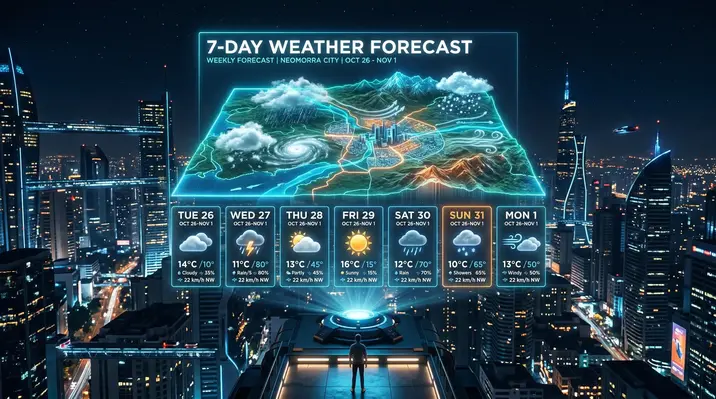
Ambee is pleased to announce a global partnership with meteoblue on climate resilience and adaptation. Ambee’s ground-sensor data will pair with meteoblue’s high-resolution climate models to support meteoblue’s Climate Risk Reports, which assess 28 climate hazards for any location worldwide, and its street-level urban heat mapping.
The first project brings meteoblue’s Climate Risk Report to companies and lenders. For any set of coordinates, the report assesses 28 types of climate hazard, from heat stress and floods to droughts and storms, and rates each one from “No Risk” to “Red Flag.” It covers current and future decades across several emission scenarios, using IPCC CMIP5 and CMIP6 climate model projections, and it supports due diligence and risk screening aligned with frameworks such as TCFD, CSRD, and the EU Taxonomy.
A climate model covers every location and scenario, and its credibility depends on how closely it reflects conditions on the ground. That is where Ambee comes in. Our ground sensor data anchors the modeling to measured conditions, and because our data is hyperlocal, available down to a single coordinate, it matches the site-level scale of the report. A company with plants and suppliers across several regions can read its results as one picture, and a lender can do the same with the locations behind its loan book, with every rating resting on measurements.
The second project is an urban heat pilot in major cities. Meteoblue’s Urban Maps show air temperature, thermal comfort, wind, and surface flooding street by street, with heat mapped at 10 m resolution. Meteoblue notes that when a city has local weather stations, it can check the model against real measurements and refine the maps. Ambee’s ground sensor data plays that role in this pilot.
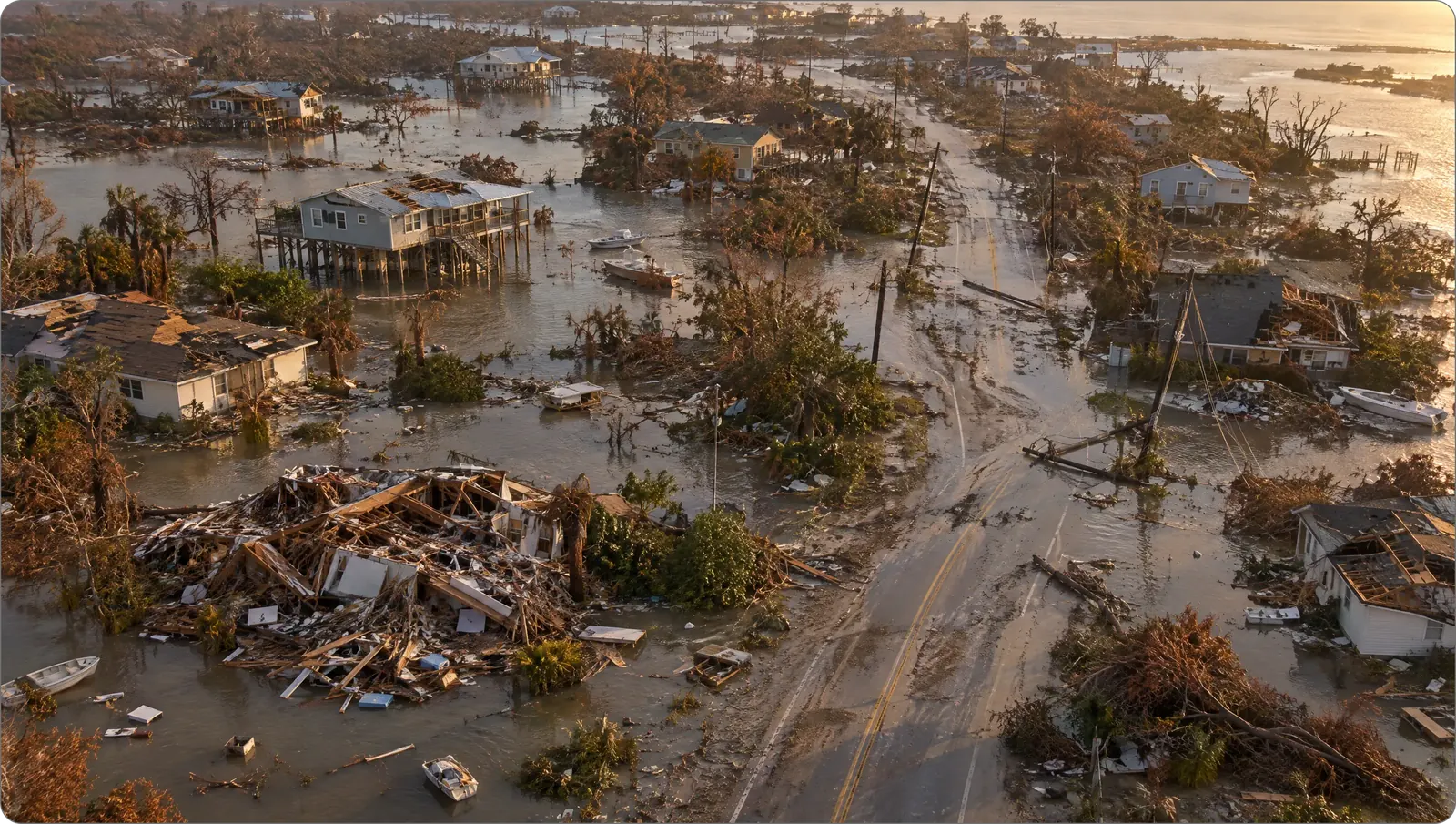
We also add the layers that show who is affected. Air quality, ozone, pollen, and vegetation data sit alongside the temperature maps, so heat can be connected to hospitalizations and workforce safety. Vegetation data shows where trees and green space are already cooling a neighborhood, and air quality and ozone add the health picture that temperature alone leaves out. For a city health team, that points to where heat-health action plans are needed most. For planners, it shows where green infrastructure would do the most good, and for employers, it shows which sites put outdoor workers at greatest risk.
“Climate resilience starts with turning reliable data into actionable insights. By combining Ambee’s ground-level measurements with meteoblue’s high-resolution climate models and audited Climate Risk Reports, we empower businesses and governments to understand physical climate risks and make informed decisions. We look forward to advancing climate resilience together with Ambee,” said Dr. Sebastian Schlögl, Head of Climate Services at meteoblue.
India’s disclosure rules are tightening quickly. Since FY 2022-23, the 1,000 largest listed companies by market capitalization have filed a Business Responsibility and Sustainability Report (BRSR). The Securities and Exchange Board of India (SEBI) added BRSR Core in July 2023, a set of indicators that must be independently verified, and that requirement reaches all 1,000 companies in FY 2026-27, which began on 1 April 2026. Lenders face a framework still taking shape: the Reserve Bank of India (RBI) published a draft climate-related financial risk disclosure framework in February 2024, and the final version has not been issued.
The physical exposure is already large. The Germanwatch Global Climate Risk Index 2026 ranks India ninth in the world for climate vulnerability. Heat adds to the burden, with a July 2026 study by the International Institute for Environment and Development (IIED) putting the cost of heat-related kidney problems and reduced capacity to work at US$78 billion in lost wages in 2024, equal to 1.99% of India’s GDP.
India is where disclosure pressure, financial exposure, and urban heat arrive together. That makes it a demanding first test, and the lessons carry to every market facing the same questions.
“We are pleased to partner with meteoblue to tackle some of the most pressing climate adaptation challenges of our time,” said Craig Stelmach, SVP of Business Development at Ambee. “Their high-resolution modeled data and our ground sensor network complement each other perfectly. By introducing audited risk frameworks and deep environmental layers to the Indian market, we are equipping businesses and governments with the actionable intelligence they need to navigate real physical risks and accelerating regulatory mandates.”
The partnership starts in India. Technical integration is underway, and we will share results as each project takes shape.
From there, the work goes global. The questions behind these projects come up wherever companies, lenders, and cities have to show how a specific location stands against climate hazards. Everything we build in India, from the site-level reports to the heat maps, is designed to carry into other regions as the partnership grows.
If you lead sustainability or risk at a company, assess credit risk at a lender, plan for a city, or manage workplace safety where heat is a daily problem, we would like to hear what you need from a site-level view. Get in touch with the Ambee team at getambee.com.
00:00
/
00:00
00:00
/
00:00
00:00
/
00:00
00:00
/
00:00