Sea ice data for a rapidly changing polar ocean
Monitor icebergs and sea ice events worldwide with event-specific data, updated every 6 hours and trusted by maritime navigation.
Monitor icebergs and sea ice events worldwide with event-specific data, updated every 6 hours and trusted by maritime navigation.


In the winter of 2023, an area of sea ice more than ten times the size of the United Kingdom failed to form around Antarctica. Scientists at the British Antarctic Survey estimated that, in a stable climate, an event this extreme would occur only once every 2,000 years without climate change.
Arctic summer sea ice continues to shrink, affecting shipping companies, researchers, and businesses operating in polar regions.
British Antarctic Survey
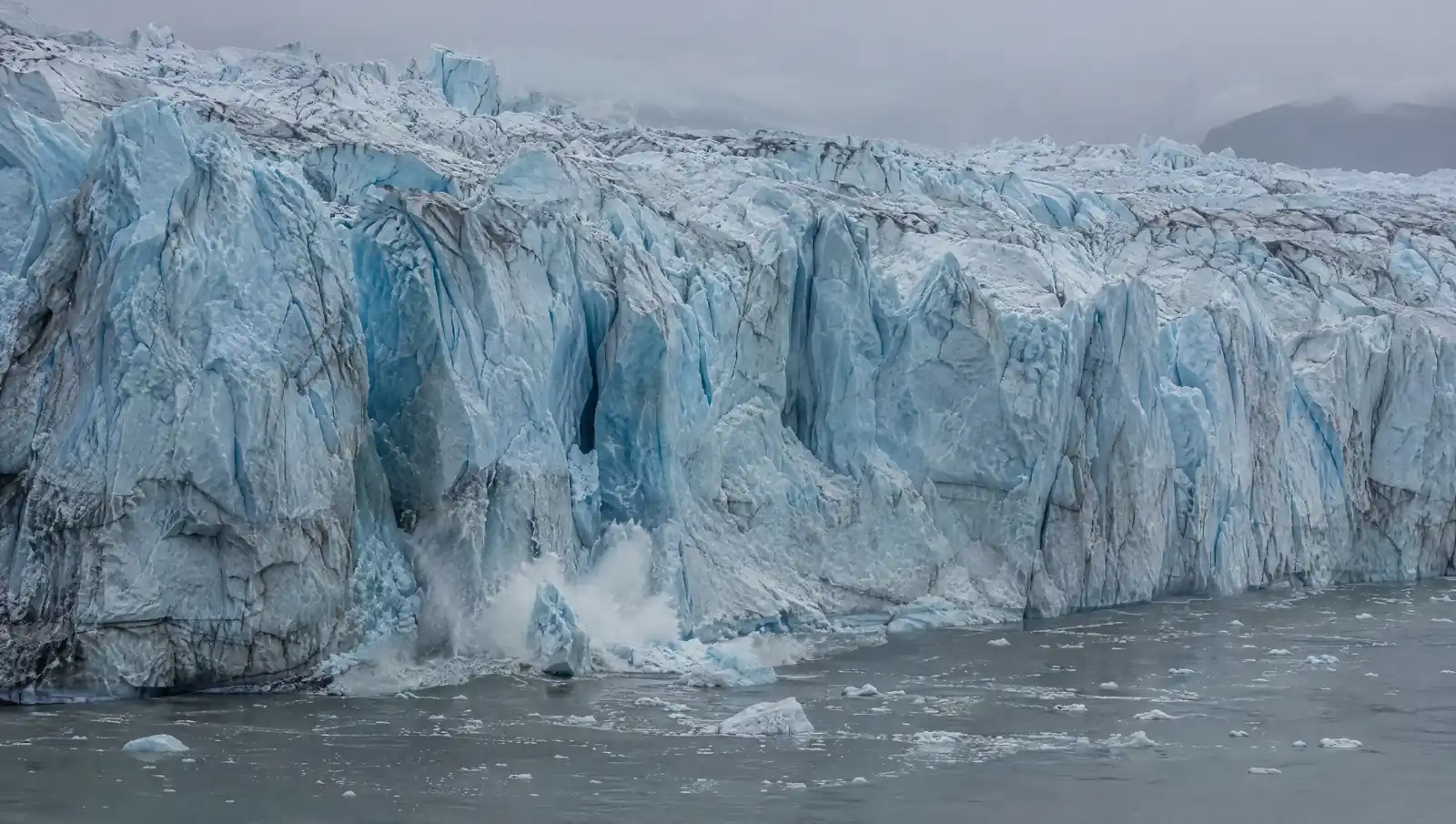

With Arctic vessel traffic now roughly double what it was a decade ago, plotting ocean transit should not depend on last week's ice chart. Real-time iceberg and ice edge tracking lets captains adjust routing in hours.

Continuous sea ice and iceberg proximity data informs shutdown windows when ice is closing in, vessel scheduling, and evacuation triggers based on what the ice is actually doing right now.

More than 2 million square kilometers of expected Antarctic winter sea ice never formed. Decades of event-level history help underwriters price coverage on actual route and seasonal exposure, not broad polar assumptions.

Fleets working the seas follow the ice edge as much as the fish. Live sea ice data helps captains track receding limits, avoid unsafe drift zones, and plan vessel effort around the ice.

Studies of polar amplification, thermohaline circulation, and ecosystem response need consistent long-horizon sea ice records. Ambee's API-delivered historical and near real-time data feeds research workflows.

Track sea ice and iceberg events across the Arctic, Antarctic, and adjacent seas with location-specific data that goes beyond regional averages.

Get current sea ice events alongside three months of historical depth, so you can see what is happening today and what has happened in the same waters before.

We combine government networks, satellite observations, and partnerships with NASA's PACE Mission to deliver verified, high-fidelity sea ice information.

Ambee's REST API delivers sea ice intelligence in many formats, including JSON, CSV, Excel, directly into dashboards and operational systems without specialized domain expertise.


const http = require("https");

const options = {
	"method": "GET",
	"hostname": "api.ambeedata.com",
	"port": null,
	"path": "/disasters/processed/latest/by-lat-lng?lat=37.7823&lng=-122.3912&eventType=SI",
	"headers": {
		"x-api-key": "API_KEY",
		"Content-type": "application/json"
	}
};

const req = http.request(options, function (res) {
	const chunks = [];

	res.on("data", function (chunk) {
		chunks.push(chunk);
	});

	res.on("end", function () {
		const body = Buffer.concat(chunks);
		console.log(body.toString());
	});
});

req.end();
const http = require("https");
const options = {
"method": "GET",
"hostname": "api.ambeedata.com",
"port": null,
"path": "/disasters/processed/latest/by-lat-lng?lat=37.7823&lng=-122.3912&eventType=SI",
"headers": {
"x-api-key": "API_KEY",
"Content-type": "application/json"
}
};
const req = http.request(options, function (res) {
const chunks = [];
res.on("data", function (chunk) {
chunks.push(chunk);
});
res.on("end", function () {
const body = Buffer.concat(chunks);
console.log(body.toString());
});
});
req.end();const http = require("https");
const options = {
"method": "GET",
"hostname": "api.ambeedata.com",
"port": null,
"path": "/disasters/processed/latest/by-lat-lng?lat=37.7823&lng=-122.3912&eventType=SI",
"headers": {
"x-api-key": "API_KEY",
"Content-type": "application/json"
}
};
const req = http.request(options, function (res) {
const chunks = [];
res.on("data", function (chunk) {
chunks.push(chunk);
});
res.on("end", function () {
const body = Buffer.concat(chunks);
console.log(body.toString());
});
});
req.end();<?php
$curl = curl_init();
curl_setopt_array($curl, [
CURLOPT_URL => "https://api.ambeedata.com/disasters/processed/latest/by-lat-lng?lat=37.7823&lng=-122.3912&eventType=SI",
CURLOPT_RETURNTRANSFER => true,
CURLOPT_ENCODING => "",
CURLOPT_MAXREDIRS => 10,
CURLOPT_TIMEOUT => 30,
CURLOPT_HTTP_VERSION => CURL_HTTP_VERSION_1_1,
CURLOPT_CUSTOMREQUEST => "GET",
CURLOPT_HTTPHEADER => [
"Content-type: application/json",
"x-api-key: API_KEY"
],
]);
$response = curl_exec($curl);
$err = curl_error($curl);
curl_close($curl);
if ($err) {
echo "cURL Error #:" . $err;
} else {
echo $response;
}curl --request GET \
--url 'https://api.ambeedata.com/disasters/processed/latest/by-lat-lng?lat=37.7823&lng=-122.3912&eventType=SI' \
--header 'Content-type: application/json' \
--header 'x-api-key: API_KEY'url = URI("https://api.ambeedata.com/disasters/processed/latest/by-lat-lng?lat=37.7823&lng=-122.3912&eventType=SI")
http = Net::HTTP.new(url.host, url.port)
http.use_ssl = true
request = Net::HTTP::Get.new(url)
request["x-api-key"] = 'API_KEY'
request["Content-type"] = 'application/json'
response = http.request(request)
puts response.read_body{
"message": "success",
"hasNextPage": false,
"page": 1,
"limit": 10,
"result": [
{
"event_type": "SI",
"alert_level": null,
"city": "Glan",
"continent": "asia",
"country_code": "PHL",
"created_time": "2026-06-08 00:48:57",
"date": "2026-06-07 23:38:00",
"details": {
"magnitude": 7.8,
"depth": 63,
"waveheight": null,
"impact": null,
"death": null,
"injured": null,
"affected": null
},
"end_date": null,
"estimated_end_date": "2026-06-08 00:00:00",
"event_id": "d44292b2a11f73f0e2bd6fa0ff159f40",
"event_name": "sea ice at in Mindanao, Philippine Islands",
"expiry_time": "2026-07-07 23:38:00",
"lat": 5.7,
"source_event_id": "noasu_tgacbc",
"state": "Soccsksargen",
"type": "event",
"lng": 125.2,
"proximity_severity_level": "High Risk"
}
]
}
Sign up for an Ambee account and generate your API key from the dashboard.
Select the endpoint based on what you need.
Specify the location using latitude and longitude coordinates, ZIP codes, or custom boundaries.
Include your API key in the request header and call the endpoint. You'll receive pollen counts, species-level data, and risk classifications in JSON format.
Real feedback from real innovators












Monitor developing storm systems to stay ahead of severe weather.

Track present and forecast temperature conditions across any location.

Get present tornado tracking to support faster, safer decisions.

Follow hurricane formation and movement to plan around coastal risk.

Follow cyclone formation and movement to plan around regional risk.

Monitor seismic activity as it happens to assess exposure.

Track how severe storms increase rainfall-driven erosion and terrain instability.
Track how severe storms increase rainfall-driven erosion and terrain instability.

Monitor flood risk as conditions develop to protect people and assets.

Track how severe storms increase rainfall-driven erosion and terrain instability.

Track how severe storms increase rainfall-driven erosion and terrain instability.

Common questions about Ambee's sea-ice data
The Ambee sea ice API provides real-time data on sea ice coverage, thickness, and movement to support climate research, maritime navigation, and environmental monitoring.
Data is refreshed every 6 hours, offering near real-time insights for proactive decision-making.
The sea ice API provides global coverage, including polar regions, shipping routes, and coastal zones affected by sea ice changes.
Yes! The API provides up to 2 months of historical sea ice data. Upon custom request, you can access up to 6 months of data, and bulk data is available for over 30 years.
Use our comprehensive sea ice API documentation, Postman guides, and developer dashboard for seamless integration. Sample code and tutorials are included.
Yes. Retrieve sea ice data by date range, coordinates, or risk level for targeted analysis.
Ambee ensures the accuracy and reliability of sea ice data through a multi-model approach to data collection. The data is then analyzed using proprietary AI and ML models.
Sea ice data is available in JSON, CSV, Excel, Parquet, and XML formats for seamless integration into your systems.