Build risk into decisions with real-time cyclone API
Ambee’s cyclone API provides visibility before disaster strikes, helping protect revenue, reroute shipments, and support operational decisions that reduce business losses.
Ambee’s cyclone API provides visibility before disaster strikes, helping protect revenue, reroute shipments, and support operational decisions that reduce business losses.


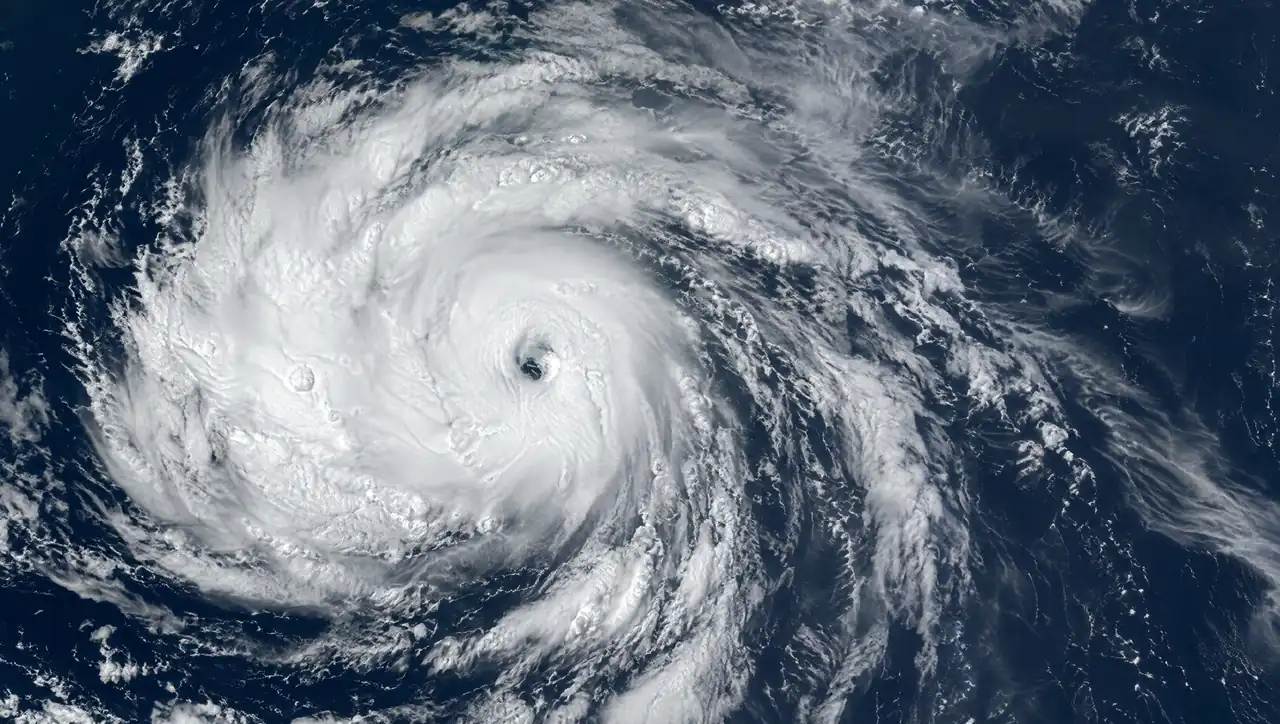
Decades ago, a tropical cyclone could form and reach a coastline before anyone knew it was there. Today, every major ocean basin is continuously monitored.
And yet, an average of 84 named tropical cyclones still form each year, causing roughly 43 deaths and about $78 million in losses every day. Ambee’s cyclone API turns what is known into what can be acted on.
World Meteorological Organization

To move beyond regional averages and price risk more accurately, underwriting teams need near real-time and historical cyclone data at a hyperlocal level.

Cyclone data helps teams reroute freight, reposition inventory away from at-risk hubs, and coordinate with partners before ports and transport corridors shut down.

Response teams can pre-position supplies before landfall by tracking storm movement and severity in real time, helping personnel reach the hardest-hit areas faster once conditions clear.

Forecast and severity data help manufacturers, distributors, and hospital networks reposition inventory early, coordinate with partners, and maintain supply continuity during periods of heightened demand.

Query a single port city via latitude and longitude, an entire country using ISO codes, or an entire continent in a single request.

Monitor named cyclones as they form and intensify, and access historical event records across past seasons to understand exposure patterns.

Data is ingested from official agencies and satellite observations, validated, and delivered as structured storm records ready for production use.

Integrate using a single API key with REST endpoints and JSON responses that plug directly into your systems, without complex onboarding.


import http.client

conn = http.client.HTTPSConnection("api.ambeedata.com")

headers = {
    'x-api-key': "API_KEY",
    'Content-type': "application/json"
}

conn.request("GET", "/disasters/processed/latest/by-lat-lng?lat=34.94900857016478&lng=141.4&eventType=TC", headers=headers)

res = conn.getresponse()
data = res.read()

print(data.decode("utf-8"))
const http = require('https');
const options = {
method: 'GET',
hostname: 'api.ambeedata.com',
port: null,
path: '/disasters/processed/latest/by-lat-lng?lat=34.94900857016478&lng=141.4&eventType=TC',
headers: {
'x-api-key': 'API_KEY',
'Content-type': 'application/json'
}
};
const req = http.request(options, function (res) {
const chunks = [];
res.on('data', function (chunk) {
chunks.push(chunk);
});
res.on('end', function () {
const body = Buffer.concat(chunks);
console.log(body.toString());
});
});
req.end();OkHttpClient client = new OkHttpClient();
Request request = new Request.Builder()
.url("https://api.ambeedata.com/disasters/processed/latest/by-lat-lng?lat=34.94900857016478&lng=141.4&eventType=TC")
.get()
.addHeader("x-api-key", "API_KEY")
.addHeader("Content-type", "application/json")
.build();
Response response = client.newCall(request).execute();using System.Net.Http.Headers;
var client = new HttpClient();
var request = new HttpRequestMessage
{
Method = HttpMethod.Get,
RequestUri = new Uri("https://api.ambeedata.com/disasters/processed/latest/by-lat-lng?lat=34.94900857016478&lng=141.4&eventType=TC"),
Headers =
{
{ "x-api-key", "API_KEY" },
},
};
using (var response = await client.SendAsync(request))
{
response.EnsureSuccessStatusCode();
var body = await response.Content.ReadAsStringAsync();
Console.WriteLine(body);
}package main
import (
"fmt"
"net/http"
"io"
)
func main() {
url := "https://api.ambeedata.com/disasters/processed/latest/by-lat-lng?lat=34.94900857016478&lng=141.4&eventType=TC"
req, _ := http.NewRequest("GET", url, nil)
req.Header.Add("x-api-key", "API_KEY")
req.Header.Add("Content-type", "application/json")
res, _ := http.DefaultClient.Do(req)
defer res.Body.Close()
body, _ := io.ReadAll(res.Body)
fmt.Println(res)
fmt.Println(string(body))
}<?php
$curl = curl_init();
curl_setopt_array($curl, [
CURLOPT_URL => "https://api.ambeedata.com/disasters/processed/latest/by-lat-lng?lat=34.94900857016478&lng=141.4&eventType=TC",
CURLOPT_RETURNTRANSFER => true,
CURLOPT_ENCODING => "",
CURLOPT_MAXREDIRS => 10,
CURLOPT_TIMEOUT => 30,
CURLOPT_HTTP_VERSION => CURL_HTTP_VERSION_1_1,
CURLOPT_CUSTOMREQUEST => "GET",
CURLOPT_HTTPHEADER => [
"Content-type: application/json",
"x-api-key: API_KEY"
],
]);
$response = curl_exec($curl);
$err = curl_error($curl);
curl_close($curl);
if ($err) {
echo "cURL Error #:" . $err;
} else {
echo $response;
}curl --request GET \
--url 'https://api.ambeedata.com/disasters/processed/latest/by-lat-lng?lat=34.94900857016478&lng=141.4&eventType=TC' \
--header 'Content-type: application/json' \
--header 'x-api-key: API_KEY'require 'uri'
require 'net/http'
url = URI("https://api.ambeedata.com/disasters/processed/latest/by-lat-lng?lat=34.94900857016478&lng=141.4&eventType=TC")
http = Net::HTTP.new(url.host, url.port)
http.use_ssl = true
request = Net::HTTP::Get.new(url)
request["x-api-key"] = 'API_KEY'
request["Content-type"] = 'application/json'
response = http.request(request)
puts response.read_body{
"message": "success",
"hasNextPage": false,
"page": 1,
"limit": 10,
"result": [
{
"event_type": "TC",
"alert_level": null,
"city": "Choshi-shi",
"continent": "asia",
"country_code": "JPN",
"created_time": "2026-06-03 18:56:49",
"date": "2026-05-28 06:00:00",
"details": {
"windspeed": null,
"total_precipitation": null,
"impact": null,
"death": null,
"injured": null,
"affected": null
},
"end_date": null,
"estimated_end_date": "2026-06-07 00:00:00",
"event_id": "08d143483093b45ffd32d2644b7ce69c",
"event_name": "Typhoon Jangmi",
"expiry_time": "2026-06-27 06:00:00",
"lat": 34.94900857016478,
"source_event_id": "EONET_20279",
"state": "Chiba",
"type": "event",
"lng": 141.4,
"proximity_severity_level": "High Risk"
}
]
}Sign up for an Ambee account and generate your API key from the dashboard.
Select the endpoint based on what you need.
Specify the location using latitude and longitude coordinates, ZIP codes, or custom boundaries.
Include your API key in the request header and call the endpoint. You'll receive pollen counts, species-level data, and risk classifications in JSON format.
Real feedback from real innovators












Monitor developing storm systems to stay ahead of severe weather.

Track present and forecast temperature conditions across any location.
Get present tornado tracking to support faster, safer decisions.
Follow hurricane formation and movement to plan around coastal risk.

Monitor seismic activity as it happens to assess exposure.

Track how severe storms increase rainfall-driven erosion and terrain instability.
Track how severe storms increase rainfall-driven erosion and terrain instability.
Monitor flood risk as conditions develop to protect people and assets.

Track how severe storms increase rainfall-driven erosion and terrain instability.

Track how severe storms increase rainfall-driven erosion and terrain instability.

Track how severe storms increase rainfall-driven erosion and terrain instability.

Common questions about Ambee's cyclone data
The cyclone API provides developers with access to weather data and services related to hurricanes and tropical storms. By integrating the API into their applications or websites, users can retrieve real-time information about cyclone paths, intensity, forecasts, and historical data.
You can sign up for the Ambee API dashboard and access the cyclone dataset with a few clicks. Our documentation provides additional guidance and support. If you have a custom request, please contact us.
The cyclone API provides real-time and historical information about cyclones and tropical storms, including their current positions, intensities, wind speeds, and directions. Additionally, users can access data on past cyclone tracks and forecasts, aiding in trend analysis and disaster preparedness.
Cyclone data can be used for research and projects. By analyzing historical tracks, intensity, and frequency, researchers can understand climate patterns and enhance disaster preparedness. They can also develop models for forecasting, risk assessment, and studying the impact of climate change on cyclone behavior and its potential consequences.
A cyclone alert is a warning issued by meteorological authorities to inform the public about an impending cyclone or tropical cyclone. It is designed to help people in vulnerable regions prepare for the potential impact of the severe weather system. The alert typically includes information about the cyclone's current location, predicted path, intensity, and possible time of landfall.
Yes, you can access historical cyclone data through Ambee’s Natural Disasters API. For any inquiries, please reach out to us.