Resources /
Blogs
Ways to prevent forest fires: 10 Proven strategies that work
February 27, 2026
DVS Roopesh
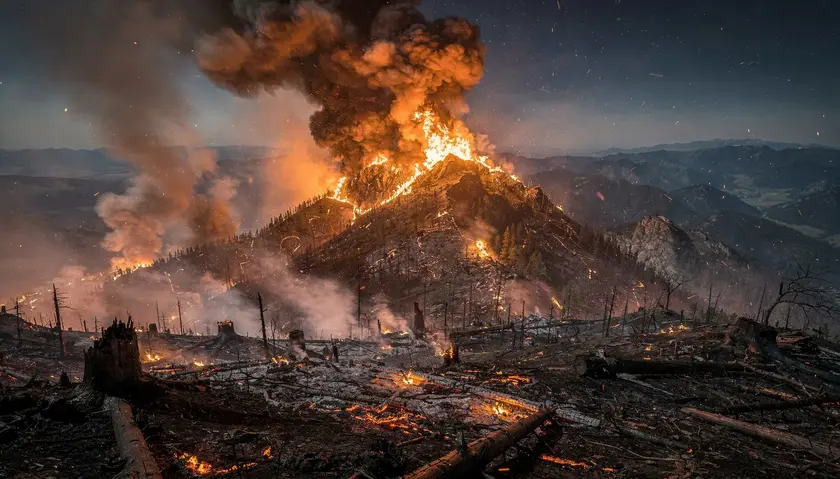
Up to 89% of wildfires are caused by humans, which means the vast majority are preventable. The most effective ways to prevent forest fires include fully extinguishing campfires, following local burn bans, maintaining equipment to prevent sparks, creating defensible space around your property, supporting prescribed burns, and using real-time wildfire risk data to stay ahead of dangerous conditions.
{{key-insights}}
Every year, wildfires destroy millions of acres of forest, displace communities, and cost billions in damage. In 2024 alone, nearly 65,000 wildfires burned across the United States, scorching roughly 8.9 million acres. The January 2025 Los Angeles fires caused an estimated $53 billion or more in losses.
Here's the part most people miss: up to 89% of wildfires are caused by humans, according to the National Park Service. Unattended campfires, discarded cigarettes, burning debris, equipment sparks, downed power lines, and arson. These are the ignition sources, not lightning.
That means prevention works. And it works at every level, from what you do on a camping trip to the data systems that help fire agencies catch fires before they spread.
Rising temperatures and prolonged droughts have extended the average U.S. fire season by roughly 78 days since the 1970s. Hotter, drier conditions strip moisture from trees and brush, turning entire landscapes into ready fuel. The World Resources Institute reported that 2024 set records for global forest fire activity, with approximately 13.5 million hectares of tree cover lost to fire worldwide.
At the same time, the wildland-urban interface (WUI), the zone where homes and businesses meet undeveloped wildland, keeps expanding. Roughly one-third of all U.S. homes now sit within the WUI, meaning each fire threatens more people, more structures, and more economic value than it would have a generation ago.
Wildfire smoke compounds the problem beyond the fire perimeter. It contains fine particulate matter (PM2.5) and toxicants from burned structures that research shows are more acutely harmful than typical urban air pollution. Smoke exposure is linked to spikes in cardiovascular and respiratory emergency visits, making real-time air quality monitoring a genuine health necessity during fire season, not a nice-to-have.
The climate trend isn't reversing anytime soon. That makes human-caused ignition prevention (the 85–89% we can actually control) even more critical.
These strategies are backed by fire behavior science and decades of data from the U.S. Forest Service and the National Interagency Fire Center.
1. Fully extinguish campfires every single time. Drown with water, stir the ashes, drown again. Repeat until everything is cold to the touch, not just cool. In dry conditions, a single ember can ignite surrounding vegetation.
2. Follow local burn bans and fire restrictions. Check with your local fire department before burning anything outdoors. Violating burn bans carries hefty fines, and you can be held liable for any fire that results.
3. Maintain your vehicle and equipment. Exhaust systems on vehicles, mowers, and chainsaws can exceed 1,000°F. Use spark arrestors on off-highway vehicles, avoid mowing dry grass during peak heat, and check that trailer chains aren't dragging on pavement. Those sparks have started fires.
4. Dispose of cigarettes responsibly. A lit cigarette can ignite dry roadside grass in under 30 seconds. Use a portable ashtray. Never flick butts outdoors near vegetation.
5. Handle debris burning with extreme caution. Obtain permits first. Keep piles small, have water and a shovel nearby, never burn on windy days, and stay until the fire is completely out. Wind shifts spread fire faster than most people expect.
6. Keep fireworks away from wildland areas. Even "safe and sane" fireworks start fires in dry conditions. Douse used fireworks with water before discarding, or attend a professional show instead.
7. Store flammable materials properly. Keep gasoline and propane away from your home. Carry out broken glass from forests because it can focus sunlight and ignite dry vegetation.
8. Be careful with outdoor power equipment. Mower blades striking rocks throw sparks. Secure loose parts, avoid metal tools when fire danger is high, and keep a fire extinguisher nearby.
9. Report unattended fires immediately. A fire caught in its first few minutes can often be contained by a single crew. After an hour, it may require thousands of personnel. If you see smoke, call it in.
10. Teach fire safety to others. Many wildfires start because people simply don't understand the risk. Make fire safety part of any outdoor activity, especially with children or newcomers to camping and hiking.
If you live near fire-prone areas, personal habits alone aren't enough. Your property needs to be prepared to survive a wildfire even when you're not home.
Defensible space is the buffer zone between your home and surrounding vegetation, organized into three zones:
Zone 0 (0–5 feet): Keep this area noncombustible. Use gravel, pavers, or bare soil. Remove all plants, and move firewood, propane, and patio furniture at least 30 feet away.
Zone 1 (5–30 feet): Mow grass to four inches or less. Space tree crowns at least 18 feet apart, and wider on steep slopes since fire travels faster uphill. Remove ladder fuels, meaning low branches and tall shrubs that let fire climb from the ground into the canopy. Prune branches 6–10 feet from the ground. Use fire-resistant plants and keep firewood at least 30 feet from any structure.
Zone 2 (30–100+ feet): Reduce tree and brush density to slow fire spread. In California, 100 feet of defensible space is legally required.
Home hardening targets the way most homes actually ignite during wildfires. It's not from direct flames but from wind-borne embers that travel over a mile ahead of the fire front. Key upgrades include Class A fire-rated roofing, enclosed eaves and soffits, fine mesh vent screens (1/8 inch or smaller), tempered windows, and noncombustible siding. The NFPA's Firewise USA program has resources to help you get started.
Individual action matters, but large-scale wildfire prevention requires coordinated community and agency effort.
Prescribed burns are one of the most effective wildfire prevention measures available. By intentionally burning accumulated dead vegetation under controlled conditions, land managers reduce the fuel that feeds catastrophic fires. The practice builds on Indigenous cultural burning traditions and modern fire science. Research shows a return of $3 to $10 for every $1 invested. The U.S. Forest Service's 10-year strategy calls for treating an additional 20 million acres through prescribed fire and mechanical thinning.
Forest thinning and fuel reduction address the dangerous buildup caused by decades of fire suppression. Removing dead timber, creating firebreaks, and managing invasive grasses like cheatgrass, which can shorten fire return intervals from 100 years to as little as five. all reduce wildfire intensity and spread.
Community Wildfire Protection Plans (CWPPs) bring together fire departments, local governments, and residents to identify risks and develop strategies. Federal funding through the Community Wildfire Defense Grant program supports communities in developing and implementing these plans.
Utility wildfire mitigation is another fast-evolving area. Power lines have been involved in some of the most devastating recent wildfires. Utilities are now investing billions in undergrounding lines, deploying sensors for real-time fault detection, and implementing automated shutoff systems that cut power when wind and humidity conditions become dangerous. On equipped lines, these systems have reduced wildfire ignitions by as much as 68%.
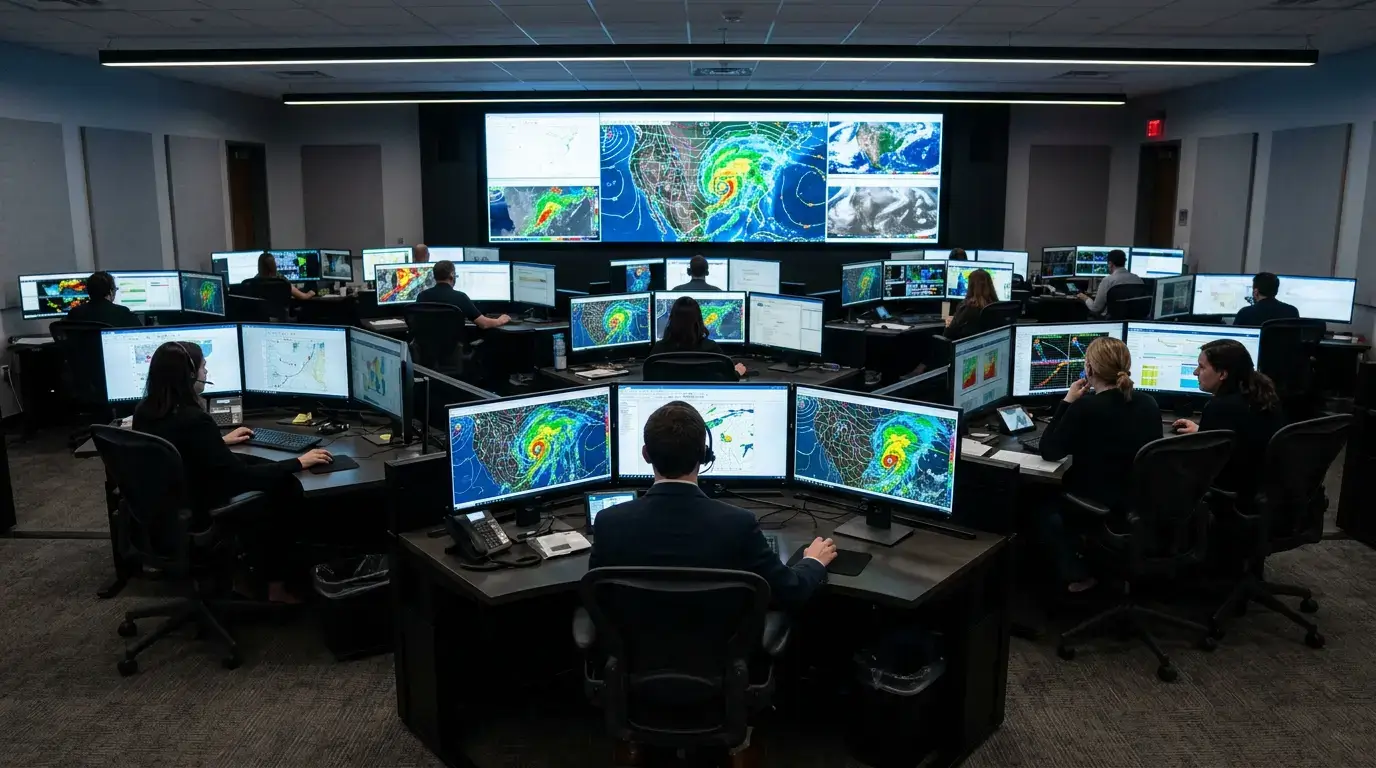
This is where most guides on how to prevent forest fires fall short, and where prevention is evolving fastest. The shift from reactive firefighting to proactive risk management depends on catching fires earlier and predicting where they're most likely to start.
AI-powered cameras using computer vision now identify smoke plumes within minutes of ignition, operating across multiple U.S. states and Canadian provinces. In documented cases, these systems have detected fires through smoke triangulation before any 911 calls came in. A June 2025 GAO report confirmed AI's significant potential for wildfire management, though operational adoption is still maturing.
IoT sensor networks deployed in forests detect fires during the smoldering phase, before flames even appear, by sensing gases like carbon monoxide and hydrogen. These solar-powered sensors work in remote areas without cell coverage, transmitting alerts through mesh networks.
Satellite monitoring through NASA's FIRMS platform delivers global active fire data within 60 seconds. Canada is investing $72 million in WildFireSat for dedicated daily tracking.
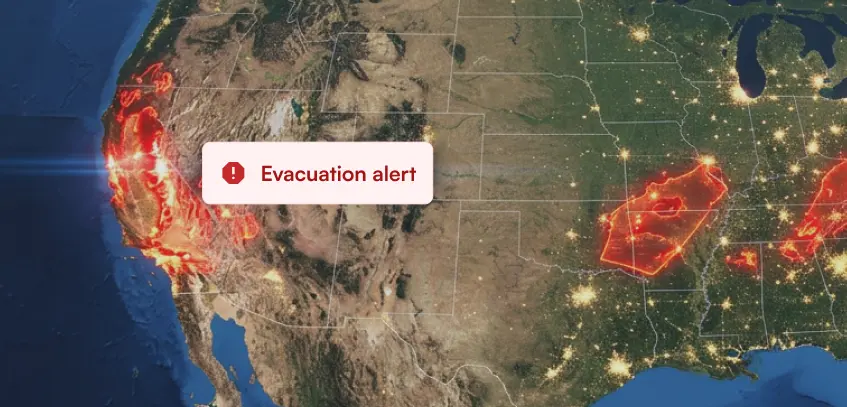
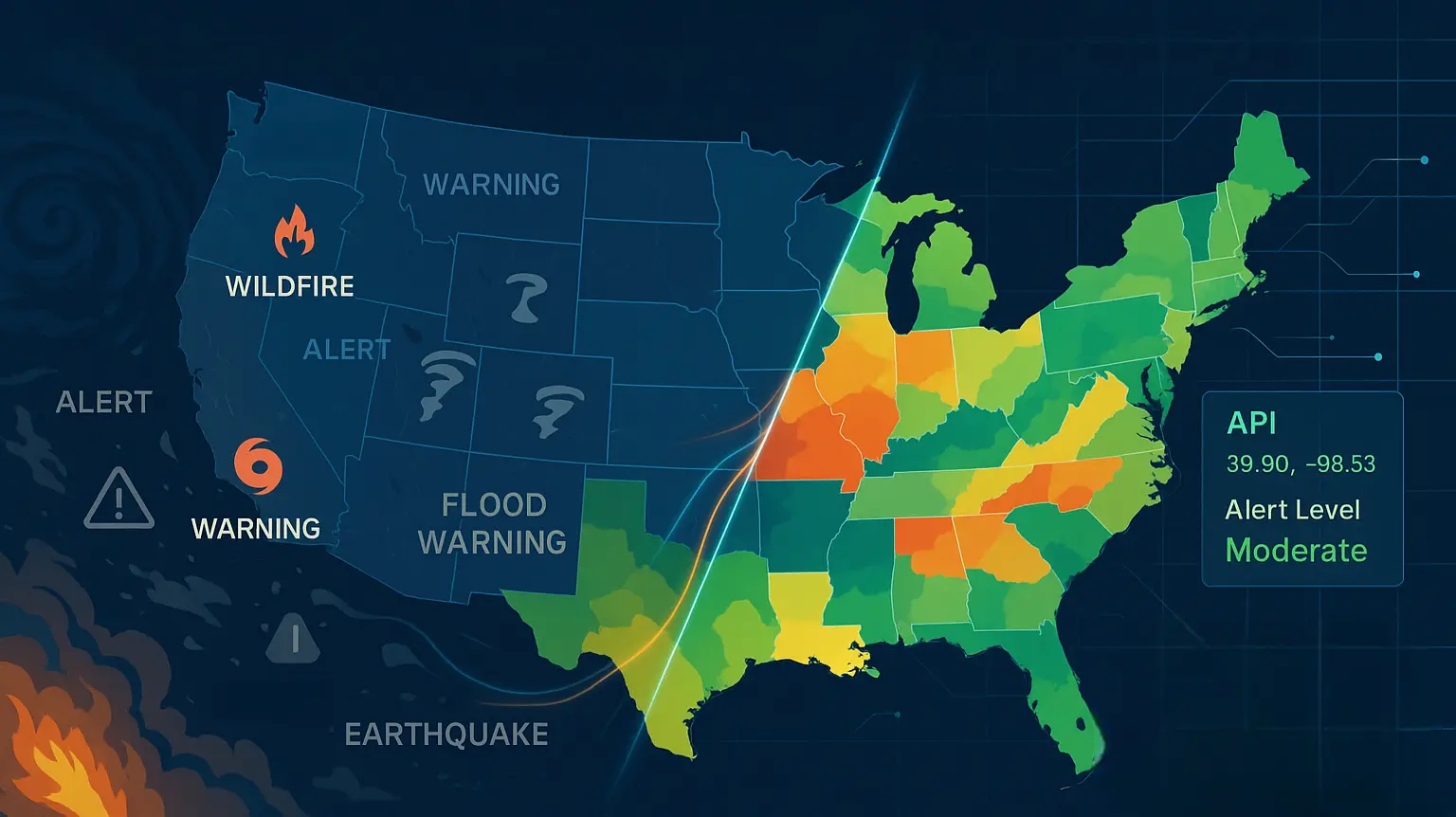
Environmental data platforms are becoming essential for organizations managing fire risk at scale. Wildfire risk forecasting now provides fire danger intelligence up to four weeks in advance using metrics like Fire Weather Index (FWI), the same indicators fire agencies use for daily fire danger assessments. Insurance underwriters use this data to model risk at the property level. Utility companies use it to plan targeted power shutoffs. Forestry agencies use it to schedule prescribed burns during optimal conditions. Historical wildfire data supports catastrophe modeling and trend analysis, while real-time wildfire tracking keeps stakeholders aware of active fire conditions.
Research consistently shows that every dollar invested in wildfire mitigation saves approximately $7 in future claims and suppression costs. The wildfire detection technology market is projected to grow from $779 million in 2024 to over $1.2 billion by 2032.
Drones round out the technology picture. Over 600 U.S. fire departments now use them for pre-fire risk assessment, real-time mapping during active fires, and monitoring prescribed burns. Thermal imaging cameras on drones detect hotspots invisible to the naked eye, and autonomous drone swarm suppression technology is in active development.
Start with what you can control. Follow fire regulations during outdoor activities. Create and maintain defensible space, and even if you can't do everything at once, start with Zone 0 and work outward. Make incremental home hardening upgrades; replacing wooden vent covers with 1/8-inch mesh screens is one of the highest-impact, lowest-cost changes you can make. Stay informed about current wildfire risk through local fire agencies and environmental monitoring tools. And always report smoke immediately. Early detection is the single biggest factor in whether a fire stays small or becomes a disaster.
Support the broader efforts too. Prescribed burns, sustainable forest management, and community wildfire plans need public buy-in to work. Attend local fire safety meetings, advocate for responsible land management, and stay informed about how wildfire risk is evolving in your region.
With suppression costs exceeding $4.8 billion in 2024 and total losses in the hundreds of billions, the case for prevention has never been clearer. The tools and strategies exist. The question is whether we use them at the scale the problem demands.
Because prevention is always more effective, and far less costly, than response.
00:00
/
00:00
00:00
/
00:00
00:00
/
00:00
00:00
/
00:00